+61 468 126 464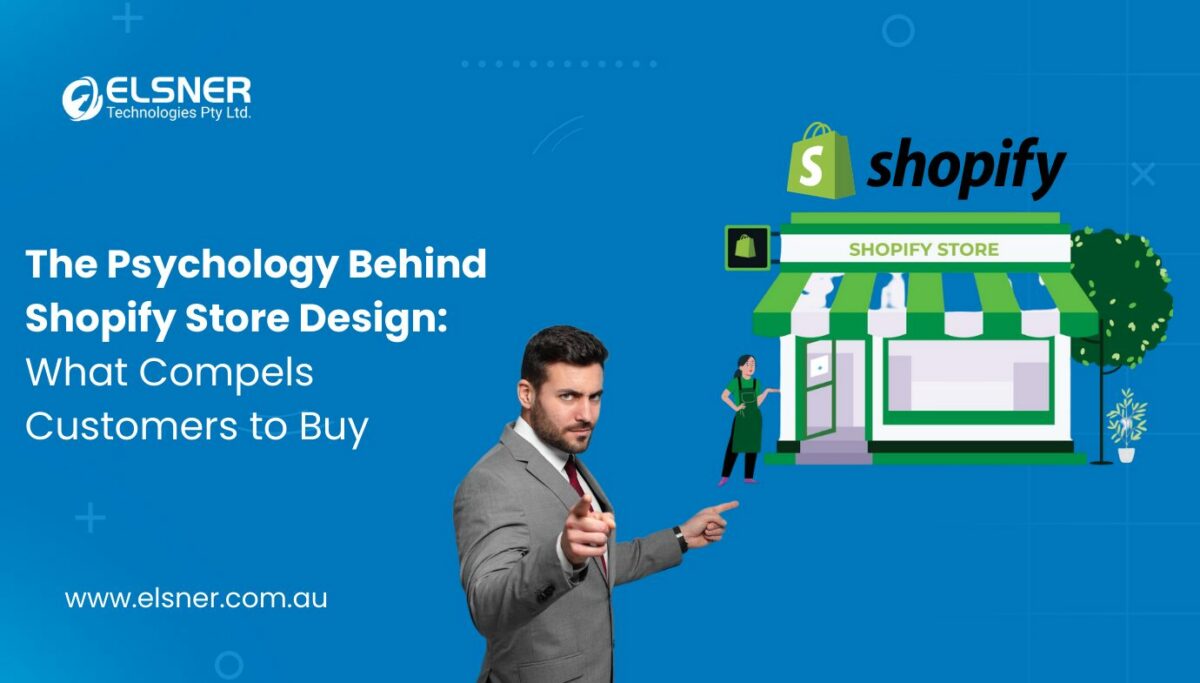

The Psychology Behind Shopify Store Design: What Compels Customers to Buy
ShopifyToday, online shoppers in Australia are option-spoilt. With a few clicks, they can scan hundreds of Shopify stores offering everything from handcrafted candles to the latest tech gear. But here’s the twist — most customers make up their mind within seconds about whether to stick around on a site or leave.
That is to say, your Shopify store layout is not only about “looking good.” It’s about establishing trust, the correct emotional responses, influencing purchasing decisions, and making it brain-dead easy for customers to say “yes” to your products.
This is not guesswork — it’s psychology. Let’s examine the key elements that go into a Shopify website development that sells, supported by behavioural science, real-world examples, and actionable strategies.
Why Psychology Matters in Shopify Store Design?
Consumers are not logical automatons who base their decisions on reason alone. A combination of emotions, unconscious triggers, and memories drives each buying decision.
For instance:
- A clean, minimalist style can convey professionalism.
- A carefully positioned product reference can immediately alleviate any uncertainty and increase conversions.
- Some urgency-based messages (e.g. “Only 3 left in stock! “) can get the reluctant buyer over the finish line.
If you’re using a Shopify web development agency like Elsner Technologies, these features aren’t mere design “add-ons” — they’re conversion multipliers.
The objective is straightforward: to build a store that encourages customers to feel confident and willing to make a purchase.
1. First Impressions: The “Halo Effect” in Action
Psychologists refer to our tendency to let one positive impression influence our feelings about everything else as the Halo Effect.
If your Shopify site loads fast, has a professional logo, and includes clean product images above the fold, visitors are more likely to make the following assumptions:
- Your products are of high quality.
- Your company is trustworthy.
- Your checkout will be seamless.
Conversely, a slow site with messy banners can instil the opposite assumption — even if your products are fantastic.
Pro tip: A skilled Shopify developer can customise your homepage to reveal your most compelling content first, making a great impression before the customer even scrolls.
2. Colours and Emotions: Creating the Right Mood
Colour psychology has a significant impact on online purchasing habits. Various shades create different emotions:
- Blue: Trustworthiness, reliability — perfect for finance, technology, or B2B goods.
- Green: Health, freshness, ecologism — best for organic food.
- Red: Haste and excitement — is effective with sales and clearance products.
For an Australian lifestyle brand, natural colours with coastal blues can draw on our cultural affinity with nature and the great outdoors.
Your Shopify theme development decisions should complement the mood you desire to create.
3. The Power of Simplicity
Decision fatigue is real. Offer customers too many choices or fill the page, and they’ll flee without making a purchase.
A successfully executed Shopify website development project emphasises:
- Simple layouts to direct attention.
- Evident product categories so users can locate what they need immediately.
- Conspicuous call-to-action buttons (“Add to Cart” shouldn’t hide in plain sight).
This simplicity is not a sign of laziness — it’s a deliberate approach to creating a frictionless buying process.
4. Social Proof: Creating Instant Trust
One of the most potent psychological triggers is social proof — our instinct to trust the choices of others.
On Shopify, this might include:
- Star ratings and text reviews.
- Photos taken by users of products in real-world settings.
- Bestseller” or “Trending” labels on product cards.c
A Shopify development agency can natively integrate review apps or testimonial pages, allowing trust signals to be displayed organically without interrupting the design flow.
5. Scarcity and Urgency
Humans are more driven by fear of missing out than by potential gain. This is known as loss aversion, and that’s why urgency techniques are so effective.
Shopify examples you can deploy:
- Countdown timers for offers expiring soon.
- Stock counters indicate low quantities.
- Flash sale homepage banners.
But use them responsibly — Australians are savvy consumers. Pseudo-urgency can come back to haunt you and damage your brand reputation.
6. Anchoring and Price Perception
The anchoring effect occurs when the initial price a customer views has an impact on how they perceive the value.
For instance:
- Pricing a $199 product next to a $299 product suggests that the lower-priced item is a deal.
- Placing a “Was $129, Now $89” reference in their heads creates perceived savings.
Your Shopify website developers can configure automatic discount displays and comparison pricing to utilise this effect without lifting a finger.
7. Effortless Navigation
One of the quickest ways to lose sales is with a bewildering navigation menu. Your menu must:
- Use simple, familiar labels (e.g. “Women’s Clothing,” not “Her Collection”).
- Provide predictive search for speedy returns.
- Display the cart icon on every page.
The goal is to make browsing second nature, so customers can focus on products — not wondering where to click next.
8. Storytelling That Connects
People don’t buy products; they only purchase product stories.
- Telling stories should be important to your Shopify style by:
- Utilising “About Us” pages with founder anecdotes and brand values.
- Communicating product origin stories (“Handmade in Byron Bay with sustainably sourced timber”).
- Including lifestyle imagery that demonstrates your products in everyday settings.
A good Shopify web development strategy makes those stories visible, not hidden in plain text.
9. Mobile-First Design
According to Statista, over 73% of e-commerce sales are expected to come from mobile devices by 2025 (source).
That means:
- Buttons must be tap-friendly.
- Fonts must be readable on smaller screens.
- Mobile checkout must be fast and straightforward.
If your mobile design feels clunky, you’re losing sales before they start. Partnering with Shopify experts Australia ensures mobile optimisation is baked in from the start.
10. Checkout Experience: The Final Hurdle
Most online carts are left abandoned due to overly long or complicated checkout processes. Minimise friction by:
- Providing guest checkout.
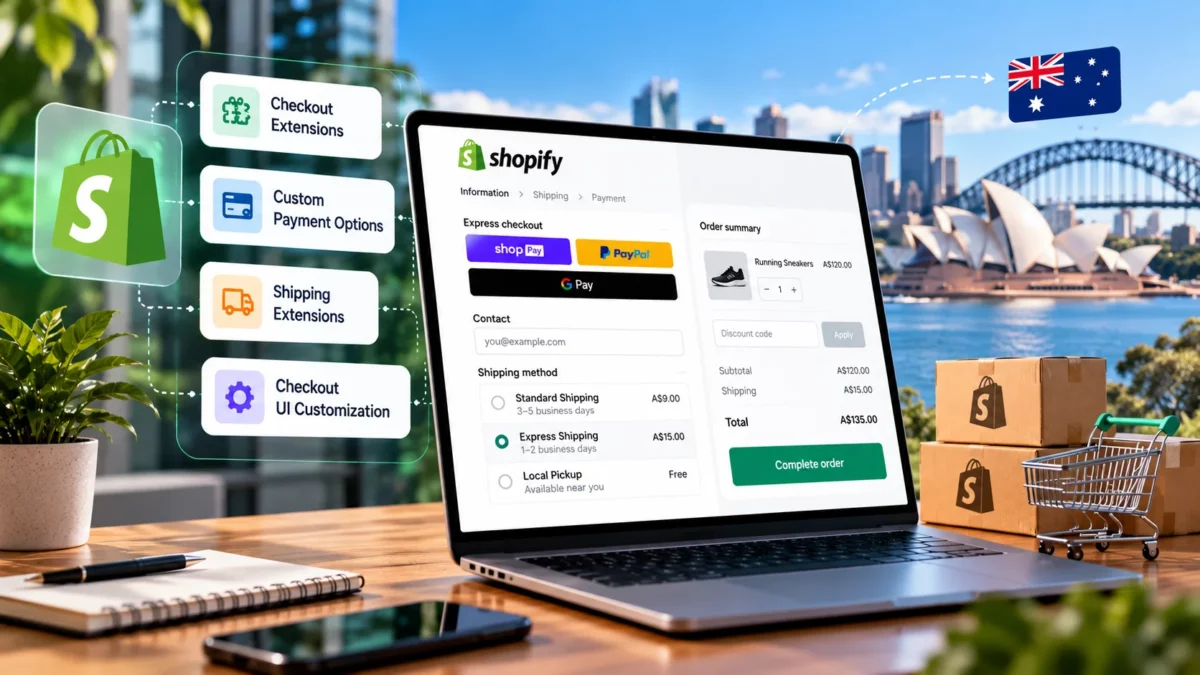
- Allowing various forms of payment (PayPal, Afterpay, and credit cards).
- Utilising progress indicators so customers can see how many steps remain.
A Shopify development services partner can tailor the checkout process to fit your brand while maintaining lightning-fast speeds.
11. Accessibility: Designing for Everyone
Accessibility is not only a matter of good ethics — it’s also good business. Alt text for images, high-contrast text, and keyboard navigation allow more people to shop easily.
In Australia, where inclusivity is ever more prized, this can make for a point of difference.
12. Microinteractions That Delight
Ever get a small animation when you add something to your cart? That’s a microinteraction — a little thing that makes the experience more delightful.
It could be:
- A gentle bounce on the “Add to Cart” button.
- A small cart sliding in from the side.
- A checkmark tick when choosing a size.
These aren’t simply enjoyable — they confirm to customers that their action succeeded.
13. Data-Driven Design
Designs are personal, but data isn’t. Your Shopify store must be tracked for statistics such as:
- Bounce rate.
- Average session length.
- Conversion rate by device.
With Shopify, stores that make data-driven design adjustments can increase conversions by up to 50%.
By using Shopify experts Melbourne, you allow them to conduct A/B testing to optimise layout and content based on real customer behaviour.
14. The Place of Expert Shopify Developers
While making your own store, a professional Shopify web developer offers:
- Technical know-how for speed and security.
- Design psychology expertise to optimise sales.
- Customisation skills for unique brand experiences.
At Elsner, for example, we combine creativity with analytics, ensuring that every design has a clear business rationale behind it.
15. FOMO: The Fear of Missing Out
If you have ever purchased an item because “everyone else seems to have it” or because “it’s only on sale until midnight,” you know what FOMO is: the Fear of Missing Out.
In online shopping, FOMO triggers a fundamental aspect of the human condition; people dislike missing out on a good deal or being excluded from something that everyone else appears to be a part of. This is why limited-time promotions, flash sales, and exclusive collections work.
Here’s how to leverage FOMO in your Shopify store’s design:
- Limited-time promotions with obvious countdown timers on the product or cart page.
- Exclusive product drops are advertised through banners or pop-ups to email subscribers.
- “Only X items remaining” stock cues to convey a lack in the moment.
But here’s the golden rule — in Australia, honesty is key. If your “sale ends tonight” notice still exists next week, buyers will distrust you. Having professional Shopify experts Australia as a partner guarantees that your urgency timers and stock notifications are set up and executed automatically and correctly.
16. The Decoy Effect: Influencing Decisions Without Pressure
The Decoy Effect is an intriguing pricing tactic that quietly influences consumers to make a preferred choice by offering a third, less appealing option.
You’re offering two versions of your product:
- Basic Plan: $29/month
- Premium Plan: $59/month
Some buyers will opt for Basic because Premium is too pricey. But when you add a third flavour —
Pro Plan: $55/month (with fewer features than Premium),
All of a sudden, the Premium Plan is now a significantly better value.
In Shopify, you can use this effect on:
- Tiered subscription plans for digital products.
- Bundled deals (“3 for $50” rather than $20 each).
- Side-by-side product comparison on a price table.
Your Shopify web development partner can create these tables in such a way that the most profitable one is signaled without making the rest look irrelevant. It’s about nudging, not coercing, the choice.
Why These Triggers Work So Well Together
FOMO instils a sense of urgency to act now, while the Decoy Effect makes the decision seem self-evident. Combined, they minimise doubt and make customers more sure of their choice.
When used by seasoned Shopify website developers, these strategies merge elegantly into the layout so they don’t come across as “salesy” — just organic aspects of the buying process.
This is where technical expertise meets behaviour psychology and gets executed: making Shopify stores that not only welcome visitors but turn them into repeat customers.
Final Thoughts
Launching a successful Shopify store doesn’t happen by accident — it is a result of many deliberate design decisions that you have made that rely on psychology. Each part matters, from first impressions, colours, and urgency, to ease of navigation, and everything works together to influence your customers to buy.
It doesn’t matter if you are beginning from scratch on a new store or updating an existing store; hiring a Shopify website development professional means you can spend time figuring out how to make your design look good and how to make your unique value proposition compelling.
With a good mix of science, creativity, and technology, you can build your store to convert casual browsers into loyal customers — and that’s the ultimate aim. Get in touch with Elsner today and let our Shopify experts help you create a store that not only looks stunning but also drives measurable results.
FAQs
1. How long does it take to design a Shopify store?
A minimum store can be built in 2–4 weeks; however, a fully custom layout would take 6–8 weeks, depending on complexity.
2. Can I modify my Shopify layout later?
Yes. Shopify is flexible – with some help from a Shopify developer, you can redesign or make modifications without having to start again.
3. Do I require coding skills to work on my Shopify store?
Not necessarily. Shopify’s dashboard is beginner-friendly, but a Shopify development agency can handle advanced customisations.