+61 468 126 464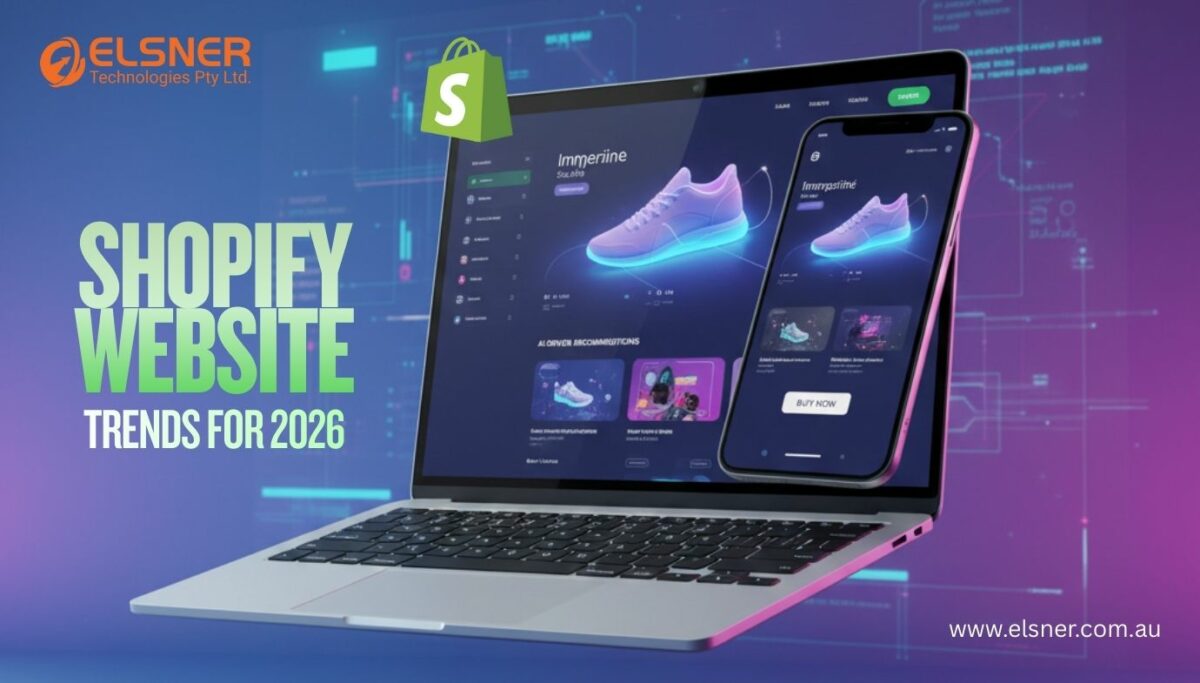

Shopify Website Design Trends for 2026: What Modern Brands Need to Stay Ahead
ShopifyEcommerce design continuously evolves each year and is largely driven by customer behaviour, new technologies, and rising expectations. Australian companies in other industries are redesigning their online stores to retain their market positions in 2026.
Due to its adaptability, expansibility, and large ecosystem, Shopify website design remains the best solution for contemporary, growth-oriented brands. Constant platform innovation keeps the stores fast, user-friendly, and ready to convert.
By looking at popular Shopify web design trends, we will identify the best Shopify website design trends for 2026, the features customers demand now, and the steps brands should take to keep their online presence forever.
Why Shopify Design Matters More Than Ever
Buyers in the current market demand more from sellers: they want pages to load instantly, their experience to be personalised, and the journey to be seamless on their mobiles. The effect of poor design on conversions, trust, and purchase frequency is immediate.
A strong Shopify store design helps users navigate the store, strengthens branding, and builds customer confidence at every touchpoint. Besides, strategic design also directly impacts Shopify website development, helping align the company’s visuals with performance, structure, and long-term scalability.
This is why finding out why Shopify design matters in 2026 should be your first priority if your business wants to stay a step ahead.
Trend #1: AI-Driven Personalisation in Storefront Design
Artificial Intelligence is one of the biggest changes to the Shopify design trends for 2026. Most stores are automated and rely on machine learning to personalise the customer journey.
Some of the things to expect are:
- AI-driven product recommendations based on real-time browsing
- Personalised homepage blocks, banners, and collections
- Behaviour-triggered popups
- Dynamic content for returning customers.
AI is having more and more of an impact on how to design high-converting Shopify stores. By leveraging professional Shopify development services, businesses can harness the power of AI for precision and security when integrating it into their store(s).
Trend #2: Immersive Visual Experiences (3D Models, AR & Motion UI)
Visual narration has been transforming over time, and 2026 is characterised by effects that are responsive and engaging for viewers.
With Shopify’s native 3D and AR, the features once associated with furniture, electronics, fashion, and cosmetics are now changing these industries. The brands are now putting the following into practice:
- AR try-on and room visualisation tools
- 360-degree product displays
- Interactive scroll animations
- Motion UI elements that guide user flow
Such experiences not only enhance the brand’s trustworthiness but also simplify the buying process, thereby supporting changes toward a modern Shopify homepage design that feels more interactive and high-end.
Trend #3: Minimalist Layouts with High-Performance UX
Minimalism has been closely linked with clearness and performance. What is to be expected in 2026 is:
- Significant use of bold typography and large amounts of whitespace
- Less-complex navigation
- Clearly established user interfaces with zero distractions
- Dark mode colour palettes
Minimalist layouts lead to faster load times and align with Shopify UX best practices. It is of utmost importance for Shopify product page design best practices, as clarity and speed significantly impact conversions.
Trend #4: Shopify Headless & Custom Storefronts
More and more Australian brands are deciding to go beyond the restrictions of the theme and opt for headless architecture.
By using Shopify Hydrogen and Oxygen, companies can design the most creative, fastest frontends that are entirely different from the standard. It is perfect for a brand that:
- Customised user experience
- Higher-than-normal API Integrations
- Extremely fast page load speed
- The ability to fully control your layout, appearance, and function
With the help of Shopify custom theme development, headless architecture has become a new way to drive changes in brand lifestyles in terms of online experiences: how they build, scale, and manage them.
Trend #5: Content + Commerce Hybrid Layouts
In 2026, storytelling became the dominant conversion strategy. Retailers are using dynamic content alongside product-focused layouts to elevate engagement and SEO.
Some of the things to expect are:
- Full-width brand storytelling sections
- Video-driven landing pages
- Influencer galleries within product pages
- Blog posts linked directly to collections
These hybrid formats support powerful Shopify design ideas, helping brands create emotional connections with shoppers.
Trend #6: Mobile-First & Social Shopping Integration
Mobile commerce is gaining greater power in Australia, which is why it is necessary to provide mobile-first experiences.
The key features are:
- Layouts that are clean and thumb-friendly
- Sticky add-to-cart bars
- Ultra-light menus
- Checkout flows that are fast and smooth
Social commerce is also on the rise, and TikTok Shop, Instagram product tagging, and native shopping feeds are becoming the standard parts of Shopify trends for ecommerce.
This goes well with many Shopify store design tips for higher conversions, especially for mobile-first audiences.
Trend #7: Web Design Sustainability and Performance
Sustainability is a factor that not only shapes how individuals make product choices but also influences the design of digital experiences.
Companies are switching to:
- Layouts that are lightweight and energy-saving
- Lazy loading + use of compressed images
- Code that is efficient and clean
- Ecologically friendly, minimalistic interfaces.
Consumers are also slowly becoming eco-conscious and are opting to buy environmentally friendly brands. That is why sustainability is a fundamental component of a contemporary Shopify website design plan.
Trend #8: Modular Layouts Using Shopify Sections Everywhere
Shopify’s newly updated Sections Everywhere framework offers brands more freedom with content.
Some of the advantages are:
- Quicker page updates
- Consistency in branding
- Building layouts through drag-and-drop
- Better possibilities for testing
It gives marketing teams power and, at the same time, they do not need a developer for every small change, which is a very important part of Shopify theme customisation in 2026.
Trend #9: Data-Driven Design Decisions
Design strategies for 2026 are mostly based on users’ actual needs. Companies using these tools can improve the:
- Product detail layouts
- Homepage structure
- Checkout flows
- Header navigation
With such an approach to the data, every change in the design can be linked to improved results, not just to the visual side.
Real-World Examples of Industries Using These Trends
These trends are being adopted by a wide range of industries, such as:
- Beauty & skincare
- Home & furniture
- Electronics
- Fashion & accessories
- Health & wellness
These industries usually have high-volume stores, and thus, they are the first to adopt Shopify Plus design enhancements and performance-focused layouts that drive higher conversion rates.
How Businesses Can Prepare for the 2026 Shopify Design Requirements?
To be ahead of the competitors, brands should:
- Plan a redesign budget well in advance
- Carry out UX and speed audits
- Check mobile conversion performance
- Refresh the outdated theme structures
- Think about whether going headless with Shopify will be beneficial
- Get designers and developers aligned early on in the planning phase
Being prepared in advance is the guarantee for a smooth transition to the new era of modern Shopify website design, as demonstrated in our recent case study with a leading retail brand, where advanced AI personalisation and mobile-first upgrades led to faster load times and higher conversions.
How Elsner Technologies Can Help?
Elsner Technologies is a great helper for Australian brands when it comes to implementing tailored Shopify solutions. Some of these solutions are:
- Custom Shopify design with UX strategy
- Complete Shopify development services
- Performance optimisation of the Shopify store
- Mobile-first redesigns
- Headless Shopify development
- Dedicated Shopify developers support
- Custom Shopify theme development and ongoing maintenance
Whether it is a minor improvement or a full-scale redesign, Elsner makes sure that your store is conversion-ready for 2026.
Parting Words
Shopify will be a completely different platform in 2026. Functionality such as AI-based personalisation, rich media, mobile-first upgrades, and headless storefronts are just a few of the advantages brands will have if they make their upgrades today, and they will be miles ahead of their rivals.
Today, when you invest in Shopify website design, you will achieve better conversions, faster load times, and an engaging experience that will be credible with your customers.
Contact us today to discuss how Elsner Technologies can help you upgrade your Shopify store and stay ahead of the competition.
FAQs
1. How frequently should I update my Shopify store?
The majority of brands change their store designs every 12-18 months to keep pace with UX and technology trends.
2. Is AI personalisation complex to integrate on Shopify?
Strategically chosen tools and developers will ensure that AI integration is trouble-free, especially given Shopify’s continuously expanding ecosystem.
3. Do these design trends apply to small businesses, too?
Certainly. Even slight modifications to navigation, layout, or performance can significantly influence conversions.
4. Should I use a Shopify website design firm to upgrade in 2026?
If you want a store with custom features, performance improvements, or complex UX enhancements, working with specialists is the most productive approach.